)
)



Lightning storytelling: Tales from accidental disaster resilience advocates
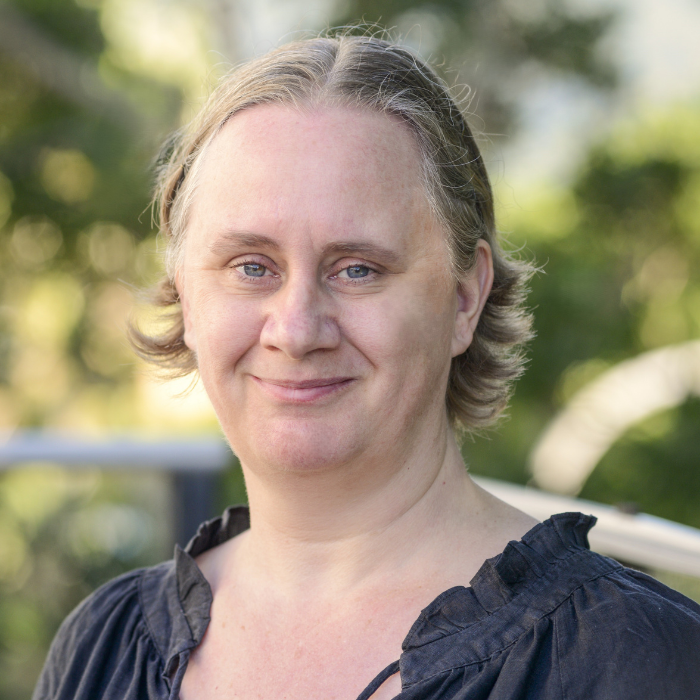
Lightning story | From lived experience to professional practice (Sabrina Davis, Australian Red Cross)
When the 2019–20 Black Summer bushfires devastated Kangaroo Island, including Sabrina Davis’ property, her understanding of fire risk was limited to household and structural fires rather than the large-scale disasters increasingly shaping Australia’s landscape. Despite living on a working farm and being married to a local firefighter, she was unprepared for the scale and impact of the event. Displaced with two young children and facing deep uncertainty around safety, shelter, and recovery, the experience disrupted not only material security but also identity and belonging. The challenges of recovery were further compounded by the onset of the COVID-19 pandemic, intensifying isolation at a critical time. In response, Sabrina founded Humans of Kangaroo Island, a community storytelling initiative that helped rebuild connection, amplify local voices, and support community-led recovery. The project grew into a powerful platform for fundraising, advocacy, and collective healing, while also shaping her path into disaster resilience work across practice, research, and policy.
Although this was never a planned career, lived experience became a catalyst for purpose and leadership. This presentation explores how personal stories, community connection, and practical action can strengthen disaster preparedness and resilience, and offering insights into how small, practical actions taken before disaster strikes can meaningfully shape outcomes.
Lightning story | How and why the Keep Calm Committee became resilience advocates for Mount Beauty (Trish Dixon, Mount Beauty Neighbourhood Centre)
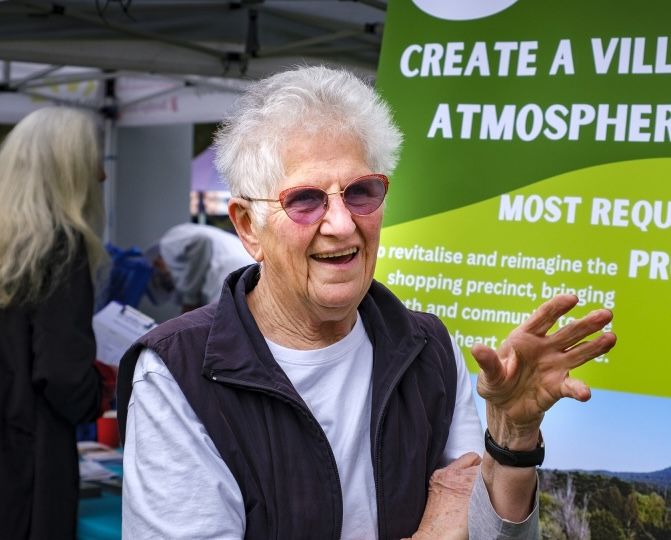
Lightning story | From Bushfire Risk to Community Power: An Accidental Path into Resilience Leadership (Maureen Halit, Millgrove Residents Action Group)
Maureen Halit never set out to work in disaster risk reduction. She is a retired local resident, community connector, and President of the Millgrove Residents Action Group motivated not by policy or profession, but by a question shared by many small, bushfire prone towns…..
How do we keep our community safer, stronger, and more connected in the face of bushfire risk?
The small town of Millgrove, in Victoria’s Yarra Valley, became a pilot for a new community-led resilience model supported by the Minderoo Foundation, Resilient Co, and the Australian Institute for Disaster Resilience. This model, now being rolled out nationally through the not-for-profit The Resilience Canopy, is designed to put local people in the driver’s seat and provide support where it’s needed most.
What began as grassroots concern evolved into a practical, inclusive process where residents identified risks, mapped strengths, and took collective action. Along the way Maureen found herself becoming an unexpected resilience advocate, bridging lived experience, local leadership, and external partners to turn intention into impact.
Maureen will: share hers’ and Millgrove’s mindset journey and what shifted when the community moved from being prepared to being empowered; and reflect on the moments that mattered, early doubts, trust-building, and realisation that resilience is less about plans on paper and more about relationships in practice.
Maureen’s story humanises resilience work and demonstrates how ordinary people can become powerful change-makers.
Being recognised as Australia Day Local Citizen of the Year in 2024 reinforces Marueen’s approach that this work is a team effort, grounded in community ownership.
Participants will leave with three moves they can apply immediately. How to:
• start resilience conversations without technical jargon,
• mobilise diverse voices and local leadership, and
• leverage the Canopy model and use simple frameworks and partnerships to turn community ambition into action.
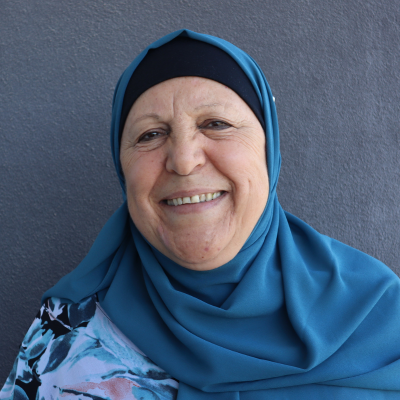
Lightning story | Accidental Resilience Advocate (Hayat Doughan, Al-Emaan Women Organisation)
I am Hayat, leader of Al-Emaan Women group. I would like to share my experience of becoming an accidental resilience advocate. I work at the Ethnic Communities’ Council of Victoria (ECCV). When ECCV received funding to establish a network focused on emergency awareness for people from multicultural backgrounds, this work became personally meaningful for me. The aim was to increase understanding of emergencies, the role of emergency service providers, and how communities can stay safe during emergency situations.
My manager invited me to join the Multicultural Emergency Management Partnership (MEMP) as a group leader representing my community. From the beginning, the experience was both inspiring and eye-opening. The network brought together mainstream emergency service providers and grassroots community leaders, creating a rare and valuable space where everyone could learn from one another.
As community leaders, we supported service providers by sharing insights into our cultural values, lived experiences, and the real barriers many people face when trying to seek help or access services during emergencies. At the same time, I was deeply encouraged by how openly the mainstream service providers listened, reflected, and acted on what they learned. Over time, I saw genuine shifts toward more culturally responsive and sensitive practices.
Service providers delivered training to community members on different types of emergencies, preparedness, and response, helping people feel more informed and confident about their safety. As group leaders, we played a vital role in promoting these sessions and ensuring information reached our communities in ways that were accessible and trusted.
I am still an active member of the MEMP, and I am proud of the impact our work has had. What began as a local initiative has grown into something influential, with requests from New South Wales and Tasmania to support the development of similar networks.
Lightning story | Turns out my admin superpowers were disaster skills after all (Rebecca Johnson, COORDINARE)
I started my career as a classic administrator: multitasking enthusiast, boredom-averse, helper by nature, and unapologetic organiser of everything and everyone. If something moved, I scheduled it. If something didn’t move, I colour-coded it. Disaster work? Not on my vision board, unless someone had accidentally filed it under “misc.”
Then the 2019/20 Black Summer arrived, and my tidy world filled with smoke, urgency, and sentences beginning with: “Bec, can you just…?” Suddenly I was tracking service impacts, coordinating respiratory supplies, managing waves of volunteers, and quietly wondering how the person who loved orderly stationery drawers had become the unofficial crisis wrangler.
Somewhere between that smoke-filled summer and spreadsheets that multiplied when I wasn’t looking, something shifted: I stopped ‘helping out’ and started owning my role as a resilience leader.
Then COVID hit and sealed the deal. What began as accidental crisis admin turned into full-blown resilience work: program delivery, logistics, vaccination rollouts, grant administration, all powered by my inner control enthusiast, so primary care teams could keep supporting people who most needed care.
By 2022, when my organisation created a permanent disaster role, it simply formalised what everyone already knew: if chaos was happening, I was probably already coordinating it.
Along the way, I learned a few moves anyone can steal:
- Make clarity your superpower - even a basic tracker can steady a team.
- Convening is leadership - get people talking before anyone feels ready.
- Use the strengths you already have - your quirks might be resilience tools in disguise.
If you try one thing in the next 30 days, try this: pick one messy workflow and tame it. Resilience often starts with the smallest, most satisfying act of quiet organisation.
When the 2019–20 Black Summer bushfires devastated Kangaroo Island, including Sabrina Davis’ property, her understanding of fire risk was limited to household and structural fires rather than the large-scale disasters increasingly shaping Australia’s landscape. Despite living on a working farm and being married to a local firefighter, she was unprepared for the scale and impact of the event. Displaced with two young children and facing deep uncertainty around safety, shelter, and recovery, the experience disrupted not only material security but also identity and belonging. The challenges of recovery were further compounded by the onset of the COVID-19 pandemic, intensifying isolation at a critical time. In response, Sabrina founded Humans of Kangaroo Island, a community storytelling initiative that helped rebuild connection, amplify local voices, and support community-led recovery. The project grew into a powerful platform for fundraising, advocacy, and collective healing, while also shaping her path into disaster resilience work across practice, research, and policy.
Although this was never a planned career, lived experience became a catalyst for purpose and leadership. This presentation explores how personal stories, community connection, and practical action can strengthen disaster preparedness and resilience, and offering insights into how small, practical actions taken before disaster strikes can meaningfully shape outcomes.
Lightning story | How and why the Keep Calm Committee became resilience advocates for Mount Beauty (Trish Dixon, Mount Beauty Neighbourhood Centre)
Lightning story | From Bushfire Risk to Community Power: An Accidental Path into Resilience Leadership (Maureen Halit, Millgrove Residents Action Group)
Maureen Halit never set out to work in disaster risk reduction. She is a retired local resident, community connector, and President of the Millgrove Residents Action Group motivated not by policy or profession, but by a question shared by many small, bushfire prone towns…..
How do we keep our community safer, stronger, and more connected in the face of bushfire risk?
The small town of Millgrove, in Victoria’s Yarra Valley, became a pilot for a new community-led resilience model supported by the Minderoo Foundation, Resilient Co, and the Australian Institute for Disaster Resilience. This model, now being rolled out nationally through the not-for-profit The Resilience Canopy, is designed to put local people in the driver’s seat and provide support where it’s needed most.
What began as grassroots concern evolved into a practical, inclusive process where residents identified risks, mapped strengths, and took collective action. Along the way Maureen found herself becoming an unexpected resilience advocate, bridging lived experience, local leadership, and external partners to turn intention into impact.
Maureen will: share hers’ and Millgrove’s mindset journey and what shifted when the community moved from being prepared to being empowered; and reflect on the moments that mattered, early doubts, trust-building, and realisation that resilience is less about plans on paper and more about relationships in practice.
Maureen’s story humanises resilience work and demonstrates how ordinary people can become powerful change-makers.
Being recognised as Australia Day Local Citizen of the Year in 2024 reinforces Marueen’s approach that this work is a team effort, grounded in community ownership.
Participants will leave with three moves they can apply immediately. How to:
• start resilience conversations without technical jargon,
• mobilise diverse voices and local leadership, and
• leverage the Canopy model and use simple frameworks and partnerships to turn community ambition into action.
Lightning story | Accidental Resilience Advocate (Hayat Doughan, Al-Emaan Women Organisation)
I am Hayat, leader of Al-Emaan Women group. I would like to share my experience of becoming an accidental resilience advocate. I work at the Ethnic Communities’ Council of Victoria (ECCV). When ECCV received funding to establish a network focused on emergency awareness for people from multicultural backgrounds, this work became personally meaningful for me. The aim was to increase understanding of emergencies, the role of emergency service providers, and how communities can stay safe during emergency situations.
My manager invited me to join the Multicultural Emergency Management Partnership (MEMP) as a group leader representing my community. From the beginning, the experience was both inspiring and eye-opening. The network brought together mainstream emergency service providers and grassroots community leaders, creating a rare and valuable space where everyone could learn from one another.
As community leaders, we supported service providers by sharing insights into our cultural values, lived experiences, and the real barriers many people face when trying to seek help or access services during emergencies. At the same time, I was deeply encouraged by how openly the mainstream service providers listened, reflected, and acted on what they learned. Over time, I saw genuine shifts toward more culturally responsive and sensitive practices.
Service providers delivered training to community members on different types of emergencies, preparedness, and response, helping people feel more informed and confident about their safety. As group leaders, we played a vital role in promoting these sessions and ensuring information reached our communities in ways that were accessible and trusted.
I am still an active member of the MEMP, and I am proud of the impact our work has had. What began as a local initiative has grown into something influential, with requests from New South Wales and Tasmania to support the development of similar networks.
Lightning story | Turns out my admin superpowers were disaster skills after all (Rebecca Johnson, COORDINARE)
I started my career as a classic administrator: multitasking enthusiast, boredom-averse, helper by nature, and unapologetic organiser of everything and everyone. If something moved, I scheduled it. If something didn’t move, I colour-coded it. Disaster work? Not on my vision board, unless someone had accidentally filed it under “misc.”
Then the 2019/20 Black Summer arrived, and my tidy world filled with smoke, urgency, and sentences beginning with: “Bec, can you just…?” Suddenly I was tracking service impacts, coordinating respiratory supplies, managing waves of volunteers, and quietly wondering how the person who loved orderly stationery drawers had become the unofficial crisis wrangler.
Somewhere between that smoke-filled summer and spreadsheets that multiplied when I wasn’t looking, something shifted: I stopped ‘helping out’ and started owning my role as a resilience leader.
Then COVID hit and sealed the deal. What began as accidental crisis admin turned into full-blown resilience work: program delivery, logistics, vaccination rollouts, grant administration, all powered by my inner control enthusiast, so primary care teams could keep supporting people who most needed care.
By 2022, when my organisation created a permanent disaster role, it simply formalised what everyone already knew: if chaos was happening, I was probably already coordinating it.
Along the way, I learned a few moves anyone can steal:
- Make clarity your superpower - even a basic tracker can steady a team.
- Convening is leadership - get people talking before anyone feels ready.
- Use the strengths you already have - your quirks might be resilience tools in disguise.
If you try one thing in the next 30 days, try this: pick one messy workflow and tame it. Resilience often starts with the smallest, most satisfying act of quiet organisation.
Speakers
)
)
)
)
)
)
)
)
)
)
)
)
)
)
)
)
)
)
)
)
)